 |
| Funding for this site is provided by readers like you. |  |
 |
|
|
|
|
|||||
|
|
|||||||
|
|
|








|

|
|
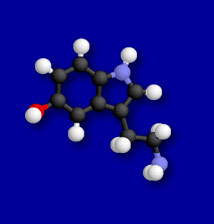
Serotonin is a chemical messenger in the central nervous system and
is involved in many physiological functions, including sleep, aggression,
eating, sexual behaviour, and depression.
But scientists have been able to measure the decline in serotonin
levels in the bloodstreams of depressed people only indirectly.
After serotonin is released from the nerve ending of a neuron,
it is either reabsorbed by that neuron or broken down into another
molecule, known as a serotonin degradation by-product. Thus, the
more serotonin there is in someone's brain, the more serotonin
degradation by-product there will be in that person's blood. In
the blood of depressed people, the levels of this by-product have
often been found to be abnormally low, which suggests that their
serotonin levels are abnormally low as well. |
|
|||||||||||||||||||||||||||||||||||||||||||




|
|
|
Depression has been linked to imbalances in certain chemical messengers in the body, such as serotonin, norepinephrine, and dopamine. Antidepressants—medications that effectively relieve the symptoms of depression—act directly on these neurotransmitters, which represents strong evidence that these chemical messengers are involved in this disorder. Starting in the mid-20th century, as scientists began to suspect that there were some biochemical bases for depression, they developed several hypotheses that attributed a key role to neurotransmitters: chemical messengers such as serotonin, norepinephrine, and dopamine. The discovery of antidepressant medications-molecules that could effectively calm the symptoms of depression-lent support to these hypotheses, because these molecules acted specifically on these neurotransmitters.
It should be remembered, however,
that the primary purpose of neurotransmitters is to let neurons
communicate with one another. Thus these diseases must be
regarded as the result of disturbances in the communications
between neurons.Such disturbances can occur at
any of the steps in the transmission of neurotransmitters across
synapses and are also the source of the effects
that drugs have on the brain. Some of the street drugs that
people take to get high—such
as ecstasy—exert
their effects through mechanisms similar to those of antidepressants. |
|


 |
 |
 |
|
|
|
|
|
|