|
|

| | Studies of the brain
circuits that use dopamine and the locations of the dopamine receptors in these
circuits have identified eight major dopaminergic pathways in the brain. Three
of these pathways are especially important. All three originate in the midbrain.
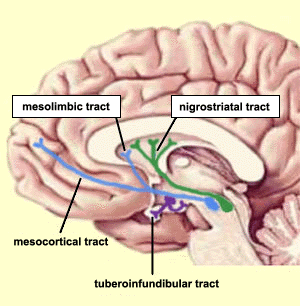
The first is the mesolimbic
pathway–the bundle of dopaminergic fibres associated with the reward circuit.
This pathway originates in the ventral tegmental area and innervates
several structures of the limbic
system, including the nucleus accumbens. The mesolimbic pathway is important
for memory and for motivating behaviours. By blocking this pathway, antipsychotic
drugs reduce the intense emotions caused by conditions such as schizophrenia.
The mesocortical pathway also originates in the ventral
tegmental area, but projects to the frontal cortex and surrounding structures.
Some evidence indicates that a malfunction in this pathway might be the cause
of some of the symptoms of schizophrenia, such as hallucinations and disordered
thinking. Medications that block this pathway reduce psychotic delirium, but also
reduce the overall activity of the frontal lobes.
| | 
|
The third, nigrostriatal pathway
projects axons from the substantia nigra to the striatum (caudate nucleus and
putamen), which is involved in motor control. Degeneration of the neurons in this
pathway is associated with the trembling and muscular rigidity symptomatic of
Parkinson’s disease.
A fourth dopaminergic pathway worth mentioning
is the tuberoinfundibular pathway, which connects the hypothalamus
to the pituitary gland, where it influences the secretion of hormones such as
prolactin. |
|